
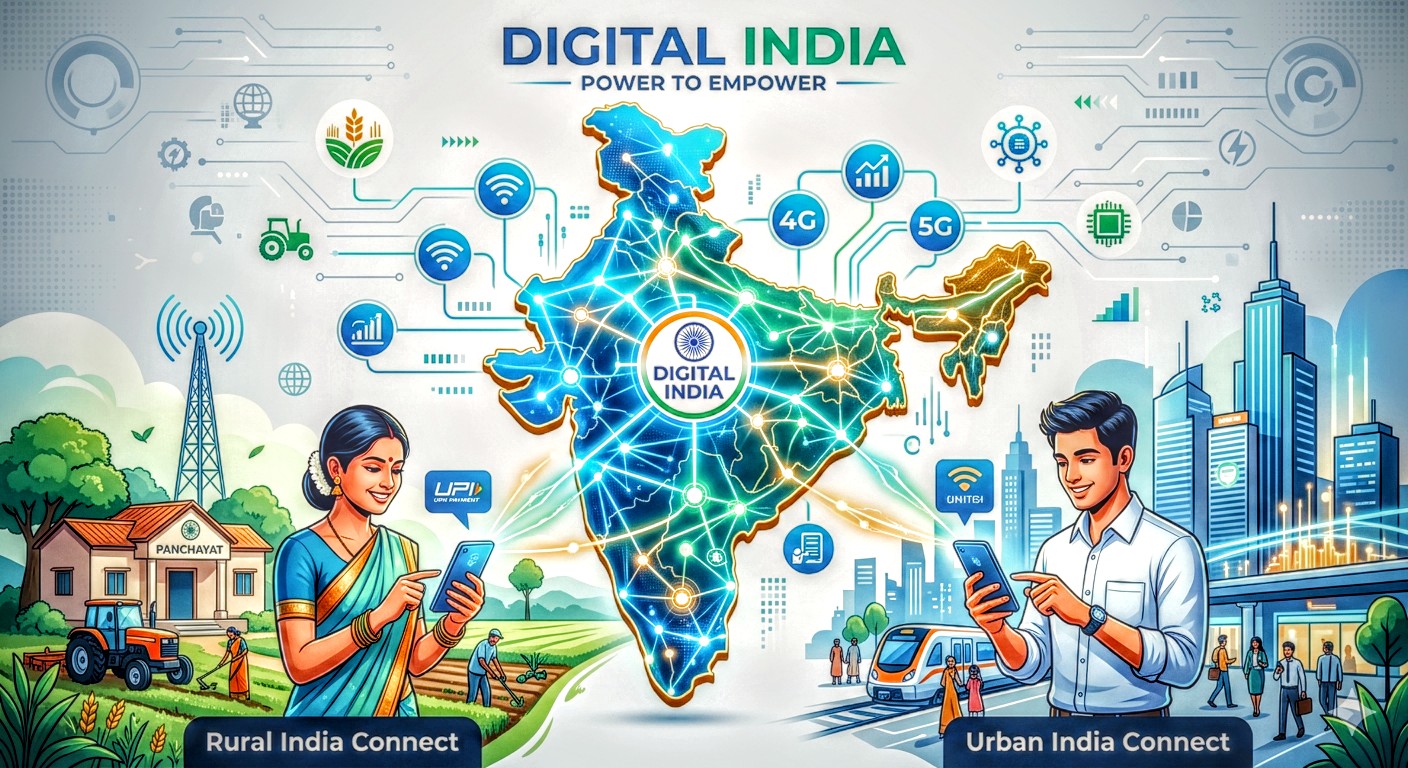
India has witnessed a major transformation in digital infrastructure over the past decade under the Digital India initiative. Launched in 2015, the program aims to ensure that government services are made available to citizens electronically, improving transparency, efficiency, and accessibility.
One of the key achievements of Digital India is the expansion of internet connectivity in rural areas. Through initiatives like BharatNet, villages across the country are being connected with high-speed broadband, enabling access to education, healthcare, and online services.
Digital payment systems have also seen rapid adoption. Platforms like UPI have simplified transactions, making cashless payments accessible even in small towns and rural regions. This has significantly boosted financial inclusion.
Another important aspect is e-governance. Government portals now allow citizens to apply for documents, track applications, and access information without visiting offices physically. This reduces corruption and saves time.
In states like Chhattisgarh, digital initiatives have helped improve service delivery, especially in areas like ration distribution, land records, and public grievance systems.
The Digital India initiative continues to evolve, focusing on emerging technologies such as artificial intelligence, cybersecurity, and cloud computing to strengthen the country’s digital ecosystem.